Before You Build a Website: The Business Strategy Questions You Need to Answer First


In This Article
Before the design process begins, we'll explore the questions that can help you:
Define what your website actually needs to accomplish
Identify and understand your ideal customers
Clarify your services, positioning and value proposition
Plan the customer journey through your website
Determine which functionality and digital systems you actually need
Make sure your website supports future business growth
Avoid investing in technology that doesn't solve a real problem
Contents
Key Takeaways
✓ The best websites are built from strategy, not templates.
Before choosing a design, businesses need clarity around their goals, audience, services and the experience they want to create.
✓ Your website should reflect where your business is going.
A website should be designed with future growth in mind rather than simply documenting where the business is today.
✓ Clear positioning and messaging come before visual design.
Customers should quickly understand what you offer, who you serve and why your business is different.
✓ Your customer journey should influence your website structure.
Every important page, piece of content and call-to-action should have a purpose within the customer's decision-making process.
✓ Technology should solve a business problem.
Booking systems, client portals, automation, AI and other digital tools can be powerful, but only when they genuinely improve the customer or business experience.
Before You Build a Website: The Business Strategy Questions You Need to Answer First
Your website isn't the problem ... your business strategy might be.
There is a moment almost every business owner experiences: you look at your website and realize it no longer represents the business you've built.
Maybe the design feels dated. Perhaps your services have changed, your target market has evolved, or your competitors seem to have much stronger online presences. Maybe customers are contacting you with questions that your website should already be answering, or your team is spending hours managing tasks that you wish could be handled more efficiently.
The natural conclusion is, "We need a new website."
Sometimes, you absolutely do.
But before you start choosing colours, fonts, photographs and page layouts, it is worth asking a more important question: Is your website actually the problem, or is it simply reflecting problems within the business itself?
A website is one of the most visible parts of a business, which makes it very easy to blame when things aren't working. It is something you can see, click through and criticize. But your website cannot create clarity where the business itself lacks clarity. It cannot convincingly communicate a value proposition that hasn't been defined, organize services that have never been properly structured, or create a customer journey that the business hasn't thought through.
In many cases, the website isn't failing on its own. It is exposing the places where the business has outgrown its existing strategy, branding, processes or technology.
And that is actually good news.
Because when you approach a website project from that perspective, you have the opportunity to do much more than build something that looks better. You can use the website project as an opportunity to create a business that works better, communicates more clearly and is prepared for what's next.

A Website Can Only Be as Clear as the Business Behind It
One of the biggest mistakes businesses make when redesigning a website is starting with the website.
It sounds obvious, but it is surprisingly common. A business owner decides the site needs to be updated, finds a designer, starts looking at templates or mood boards, chooses a new colour palette and begins talking about pages. Before long, everyone is discussing whether the homepage should have a video, whether the buttons should be rounded and whether the logo should be larger.
Those things have their place. Design matters enormously.
But they are not the first questions that need to be answered. Before thinking about what the website should look like, you need to understand what the website needs to do.
That starts with the business itself:
Has the company changed since the current website was built?
Are the same products and services still the focus?
Is the business targeting the same customers?
Has the company moved into a higher-end market, expanded geographically or added new capabilities?
Has the owner become more specialized?
Has the team grown?
Are there new opportunities that the current website isn't communicating?
These questions can completely change the direction of a website project.
For example, a business that started five years ago with three core services may now have eight. From the owner's perspective, adding those services may have happened naturally over time. But from a customer's perspective, the website may now feel confusing and unfocused.
The problem isn't necessarily that the website needs more pages.
The problem may be that the business needs a clearer structure.

The "We Need a New Website" Conversation
When a business owner tells me they need a new website, I think one of the most useful things to understand is why they feel that way. The answer often reveals much more than the website itself.
If the response is, "Our website doesn't explain what we do anymore," that may indicate that the business has evolved without redefining its positioning.
If they say, "We're getting visitors, but we're not getting inquiries," the problem may have more to do with messaging, trust, calls to action or the customer journey than the visual design.
If they say, "Customers keep calling us to ask the same questions," perhaps the website needs better information architecture, a customer portal, forms, automation or self-service functionality.
If the owner says, "Our competitors look much more professional than we do," that could indicate a branding problem rather than simply an outdated website.
And if the response is, "We've grown, but everything is still being done manually," then the website project could be an opportunity to rethink the business's digital systems altogether.
The website may still need to be redesigned in every one of these situations. But the reason for redesigning it is different. That distinction matters because a new design cannot solve a problem it was never designed to address.
Your Business Has Probably Changed More Than Your Website Has
Businesses rarely remain static.
You may have started with one idea and discovered that your customers wanted something else. You may have added services because clients kept asking for them. You may have moved into a new market, hired employees, changed your pricing or developed a completely different business model.
Meanwhile, your website may still be telling the story of the business you had several years ago. This is one of the most common reasons websites begin to feel "wrong." The business has evolved, but its digital presence hasn't kept up.
A website redesign gives you an opportunity to stop and ask what the business looks like today and, perhaps more importantly, where you want it to be tomorrow.
That means looking at questions such as:
Which products or services are most important to the future of the business?
Which customers are the best fit?
What do you want the company to be known for?
What makes you different from your competitors?
Are there services you should remove, combine or reposition?
Are there new markets you want to reach?
What parts of the customer experience are currently frustrating?
What processes are taking too much time internally?
What would you like the business to be able to do that it cannot do today?
The answers should influence the website long before the first page is designed.
Strategy Should Come Before Design
Good website design is not simply about making a business look professional. It is about using design to communicate information, guide decisions and create an experience that supports the goals of the business.
That requires strategy.
One of the first strategic questions is who the website is actually speaking to. Many businesses try to make their website appeal to absolutely everyone because they don't want to exclude potential customers. The result is often generic messaging that doesn't strongly connect with anyone.
Your ideal customer doesn't have to be the only person who can buy from you. However, the website should make it immediately apparent who you are particularly well equipped to help.
The next question is what problem you solve.
Businesses often describe themselves by listing their services: consulting, accounting, marketing, construction, design, legal services, real estate, coaching or whatever their particular specialty happens to be. But customers aren't necessarily looking for a list of services. They are looking for a solution to something that matters to them.
Think of:
What problem are you trying to solve?
What outcome are you hoping to achieve?
What becomes easier, better, faster or less stressful because your customers chose you?
Your website needs to make that connection.
Finally, there is the question of why someone should choose you instead of the dozens of other businesses offering something similar.
Your differentiation might come from your experience, specialization, process, technology, customer service, personality, philosophy or the particular type of client you serve. Whatever it is, it needs to be communicated rather than assumed.
A customer shouldn't have to conduct an investigation to figure out why your business is different.
Your Website Should Have a Job
A website should do more than exist.
It should have a purpose, and that purpose will vary from one business to another.
For some businesses, the primary objective may be generating qualified leads. For others, it might be selling products, booking appointments, educating customers, establishing credibility or providing existing clients with access to information.
Often, it is several of these things at once.
Before redesigning a website, it is worth identifying the actions you want visitors to take.
Those might include:
Booking a consultation or appointment
Requesting a quote
Completing an inquiry form
Purchasing a product
Registering for a program
Joining a membership
Downloading information
Calling or emailing the business
Logging into a client portal
Accessing documents or resources
Once those objectives are clear, the structure of the website becomes much easier to determine.
The homepage doesn't need to say everything. Every page doesn't need to sell everything. And visitors shouldn't have to figure out where to go next.
A good website guides people toward the right next step.
The Modern Website Is More Than a Digital Brochure
Perhaps the biggest shift in website design over the past several years is that a business website no longer has to be simply a collection of information pages.
For many businesses, the website can become part of the actual infrastructure of the company.
Think about a service business that currently manages appointments through emails and phone calls. A booking system could allow customers to schedule themselves, receive confirmations and reminders, and reduce the administrative work required by staff.
A business with recurring customers might benefit from a secure client portal where customers can access documents, submit requests, review information or communicate with the company.
A growing company may need an employee hub containing policies, procedures, training materials and internal resources.
A company that sells services might need online proposals, quotes, invoices and payment functionality.
A business with a large amount of specialized knowledge might benefit from a searchable training platform or AI-powered knowledge system.
These aren't simply website features. They can fundamentally change how a business operates.
That's why I increasingly think of a website as potentially being part of a digital business system, rather than simply a digital brochure.
The right question isn't always, "What pages should my website have?"
Sometimes the better question is:
"What should my business be able to do online?"
Technology Should Solve Problems - Not Create More of Them
There is an important caveat to all of this.
Just because something can be automated doesn't mean it should be.
Businesses sometimes become so focused on adding technology that they forget to examine the process they are trying to improve. If the underlying process is confusing, automating it can simply make the confusion happen faster.
Before introducing a new system, it is worth asking whether the existing process actually makes sense.
For example, if a customer currently has to complete three different forms to request one service, adding another automated notification won't solve the fundamental problem. The better solution may be to rethink the process entirely and then determine where technology can make it simpler.
The same principle applies to internal systems. If employees are struggling to find information, the answer may not be another software subscription. It might be a better way of organizing the information in the first place.
Technology should support a well-designed process, not compensate for the absence of one.
Your Brand and Your Website Need to Tell the Same Story
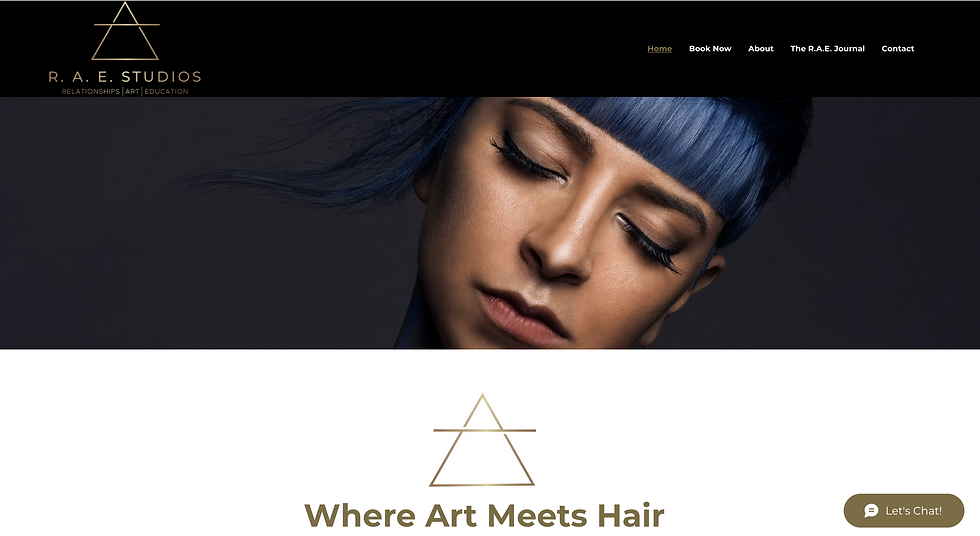
Another common reason a website stops working is that the brand and the business have evolved in different directions.
Perhaps the company has grown considerably, but the branding still looks like it did when the business was first launched. Or perhaps the visual identity is polished, but the website copy doesn't communicate the same level of professionalism.
Sometimes the opposite happens. The website has been redesigned several times, but there is no consistent visual or verbal identity tying everything together.
Your brand is much more than your logo.
It encompasses the way your business is positioned, how it communicates, how it looks, how it makes customers feel and what people expect when they interact with you. Your website is one of the most important places where all of those elements come together.
When the positioning, messaging, visual identity and digital experience are aligned, customers don't have to work as hard to understand the business.
And clarity builds confidence.

Sometimes a Website Redesign Is Really a Business Audit
This is why we believe a good website project should involve more than reviewing the current website and deciding what should change.
Sometimes you need to step back from the website altogether.
Look at the business as if you were an outsider encountering it for the first time:
What would you understand?
What would confuse you?
What questions would you have?
Where would you hesitate?
It can be helpful to evaluate the business from several different perspectives.
Your Business
Consider what has changed since the existing website was created. Have your services, pricing, target market, team or business model changed? Are there areas of the company that are growing particularly quickly, or areas that are consuming more time than they should?
Your Customers
Think about your best customers and what they have in common. What are they trying to accomplish when they contact you? What questions do they ask? Where do they experience friction? What information could you provide earlier in the process?
Your Brand
Ask whether your current branding accurately reflects the business you have today. Does it differentiate you from competitors? Does it communicate the level of service you provide? Does it feel consistent across your website, social media, marketing materials and other customer touchpoints?
Your Website
Look critically at the current experience. Can someone understand what you do quickly? Is the navigation logical? Does the site work well on mobile devices? Are your calls to action clear? Is the content current? Most importantly, is the website helping you achieve the goals you have for the business?
Your Systems
Finally, consider what happens behind the scenes. Are you manually doing things that could be streamlined? Are customers repeatedly asking for information they could access themselves? Are employees searching through emails and folders for documents? Are your systems connected, or are you constantly moving information from one platform to another?
These questions can reveal opportunities that would never be discovered by simply changing the homepage design.

Don't Build for the Business You Have Today Alone
One of the biggest opportunities in a website redesign is thinking beyond the immediate project.
If you're investing in a new website, you don't want to build something that becomes obsolete as soon as the business grows again.
That doesn't mean you need to build every possible feature on day one. In fact, trying to do everything immediately can make a project unnecessarily complicated.
Instead, think about the direction of the business.
If you plan to introduce memberships next year, the architecture should ideally be capable of supporting them. If you expect to expand your team, consider what internal systems may eventually be useful. If you're planning to add new services, structure your content and navigation so the website can grow with you.
A good digital system should have room to evolve.
The goal isn't to predict every future need. It is to avoid unnecessarily boxing the business into a system that cannot grow with it.

So, Do You Actually Need a New Website?
Maybe.
But I wouldn't begin by asking what your new website should look like.
I would begin by asking what you want your business to accomplish.
What has changed? What isn't working? What are customers struggling with? What do you want to be known for? Where do you want the business to go? What could be made easier? What could be automated? What should customers be able to do themselves? What does your team need?
Once you answer those questions, the website becomes much easier to define.
Maybe you need a straightforward redesign with better structure and messaging. Maybe you need a complete rebrand. Maybe your services need to be reorganized before the website is touched. Perhaps you need better lead-generation tools, a booking system or a client portal.
Or perhaps what you really need is a broader digital business system that brings several of these pieces together.
The point is that the solution should come from the needs of the business — not from whatever website trend happens to be popular this year.

Your Website Should Work as Hard as You Do
A good website should certainly look professional. But aesthetics are only one part of the equation.
Your website should help people understand your business, recognize your value, trust your expertise and take the next step. Where appropriate, it should also help your team work more efficiently by reducing repetitive tasks, organizing information and connecting the tools your business relies on every day.
That is why we believe the best website projects begin with a much bigger conversation.
They begin with the business.
At Pip Design, we look at websites as part of a larger picture that can include business strategy, branding, marketing, technology and digital business systems. The goal isn't simply to create something attractive and put it online. The goal is to create a digital presence that makes sense for the business, supports its customers and gives the company room to grow.
Because sometimes your website really is the problem.
But sometimes the website is simply the place where the problem became visible.
And when you take the time to understand what's happening underneath it, a website redesign can become something much more valuable than a new look.
It can become an opportunity to build a better business.

Ready to look at your business differently?
If your website isn't performing the way you need it to, the answer may not be another redesign. It may be time to step back and look at the bigger picture.
At Pip Design, we help businesses bring together business strategy, branding, websites, marketing and digital business platforms to create solutions designed around how the business actually works and where it wants to go next.
Whether you need a better website, a client portal, employee hub, a stronger brand, a more effective customer experience or a complete digital business system, the first step is understanding what your business really needs.


About the Author
Tatiana Colhoun is the founder of Pip Design, a business and digital solutions consultancy specializing in strategy, branding, websites, digital business systems and emerging technology. Pip Design works with businesses to turn ideas and complex digital needs into practical, cohesive solutions designed around how they operate and where they want to go.